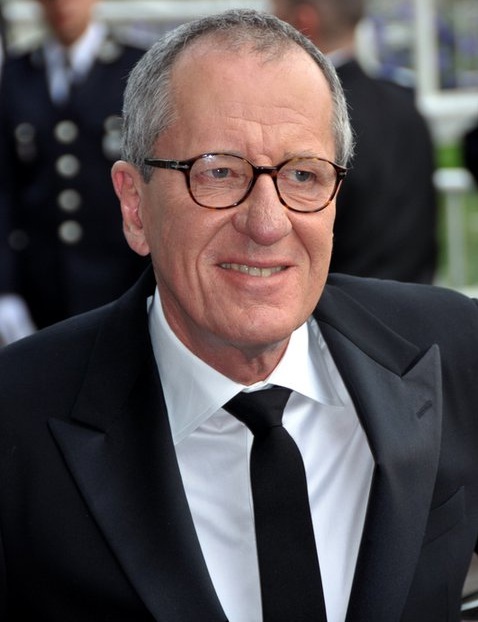
Is Geoffrey Rush Brisbane’s greatest living actor? If he is not I await nominations of who might eclipse him.
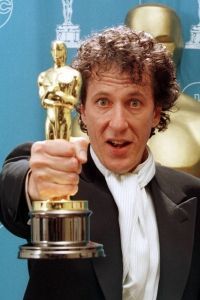
He burst onto the international scene at the advanced age for an actor of 45 with the film Shine, in which he played the brilliant but troubled Australian pianist David Helfgott. He won an Oscar for it. It was richly deserved. He was the first Australian born actor to do so.
Since then I have enjoyed a string of his movies, rumpled features and all, including, in no particular order, The King’s Speech, The Tailor of Panama, Elizabeth, Quills, The Life and Death of Peter Sellers, The Book Thief, The Best Offer, Munich, The Eye of the Storm, and Swimming Upstream.
Not to put too fine a point on it. Geoffrey Rush is a great actor. He’s up their with the best. One of his role models was the late Brit Alec Guinness, who was an equally supple talent not endowed with squared jawed, pearly teeth Hollywood good looks. Others he admired were the young realists Robert de Niro and Al Pacino.
Rush was born up the mountain in Toowoomba in 1951, but when his parents split five years later he moved to Brisbane with his Mum, where they lived with his maternal grandparents. He attended Everton Park State High School and the University of Queensland. While there, in 1971, he was tapped on the shoulder to join the Queensland Theatre Company, which had been formed just a year earlier by respected actor and drama teacher Alan Edwards. Altogether he appeared in 17 QTC productions before heading off into the big wide world to Paris for two years, before returning to QTC in 1977. The rest is history. See his Wikipedia entry for the details.
He recalled the impact of his very early years in Toowoomba, when he saw travelling tent shows that were the tail end of the vaudeville era, before television started. His home had a radio and a piano as the only sources for entertainment. As a child he remembers cutting up shoeboxes, making little proscenium arch theatres, painting scenery and moving figures about. ‘It had an absolute magic for me’, he told Andrew Denton a few years ago.
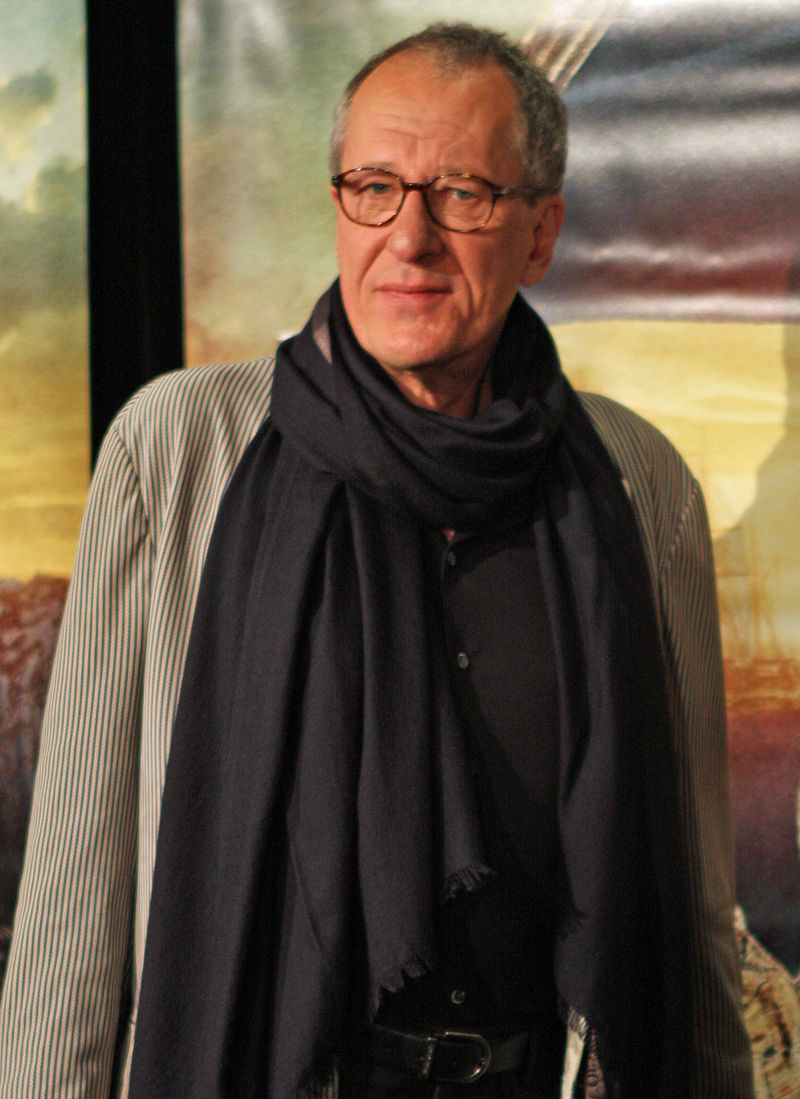
He credits the Whitlam Federal government of the early 1970s with fostering his acting life. It began highlighting the arts and subsidised the theatre scene so that it began to flourish to the point where every state had a theatre company. ‘Then films got kick-started again in the 70s, and I thought, Great. I love going to the movies but it’s not where I’m heading, I’m a stage actor, and that all changed when I was 44. Late bloomer’.
He says he has been lucky. ‘I was rolling along in the theatre and having a good time, and then I got these movie roles. I have a few favourites. There was just a great mob of people that were involved with Shakespeare In Love. We just had a blast making it. I had a really good, scary time in the Peter Sellers film.
Rush is widely acknowledged for his support and concern for Australian film and theatre. In 2012 he was named Australian of the Year, not so much for his high profile successes but for his behind the scenes work mentoring young actors and supporting theatre companies. He reckons about half his films have been local productions.
He recently told a U.S. audience: ‘I live in Australia and I am Australian, and because I grew up in an era where we didn’t have a film industry, and now we do, it’s just really exciting for me to be able to say that I work in my own culture, in a medium that I find fascinating. That’s ranged from doing an indigenous musical, to being part of animated features in Australia, or even doing Finding Nemo, which is set in Australia.’
When he won the 1996 Oscar, not that many people even in Australia had heard of him. It was a sort of ‘out-of-the-blue’ moment. “I wasn’t part of that club,” he said many years later, conscious of the fact that his peers had honoured him for the power of his performance alone. “At the time I was quite rightly, genuinely humble and self-deprecating, because I think I had it all pretty clearly in perspective. I probably should have been more boastful and said, We did this with an Australian film. I’m an Australian actor in a very small, independently produced film that happens to be a complete shift in what we’ve ever made in this country’.
Rush has played his share of edgy characters, and indeed might be classified as a ‘character actor’, providing that is not a belittling term. Some of source material for these roles no doubt comes from within. He has acknowledged he suffered through a period of profound doubt and panic of varying degrees of intensity in the early 1990s that ended just before he did Shine. ‘And it just became a sort of awkward cumbersome dead weight or lump of fright that you had to also negotiate while you were negotiating all the other things that are thrilling and scary for you as an actor, in terms of creating a role.”
He has played roles he has called ‘scary, challenging’: ones like Peter Sellers, De Sade in Quills or David Helfgott, which kept his career buoyant and active. All are disturbed creative types.
‘Those films – they’re all edgy. Whereas in the theatrical repertoire, it’s pretty standard that most of the great classical roles are a bit crazy: Hamlet, loopy, questioning his identity, going a bit mad, or pretending or both; Richard III, criminally insane; King Lear, bonkers; Don Quixote, a nutter. That’s what drama does: it explores the range and edges of heroic central figures in our collective psyche’, he once told the Monthly magazine.
Like so very few in the narcissistic world of tinsletown he has been married for nigh on 30 years to the same person. So there is stability amongst the anarchy of the many roles he has made his own.
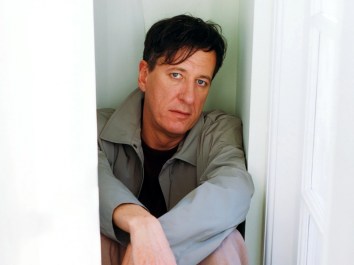 He now lives in Melbourne. But in the 2003 film Swimming Upstream co-staring with the acidic Judy Davis, he returned to his roots. He plays the blue-collar, hard drinking, fanatical father of a potentially great swimmer. Set in Brisbane of the late 1950s and early 60s it captures the dried out, pared down nature of hardscrabble life of the city that he grew up in. And, as usual, he is utterly believable.


Leave a Reply