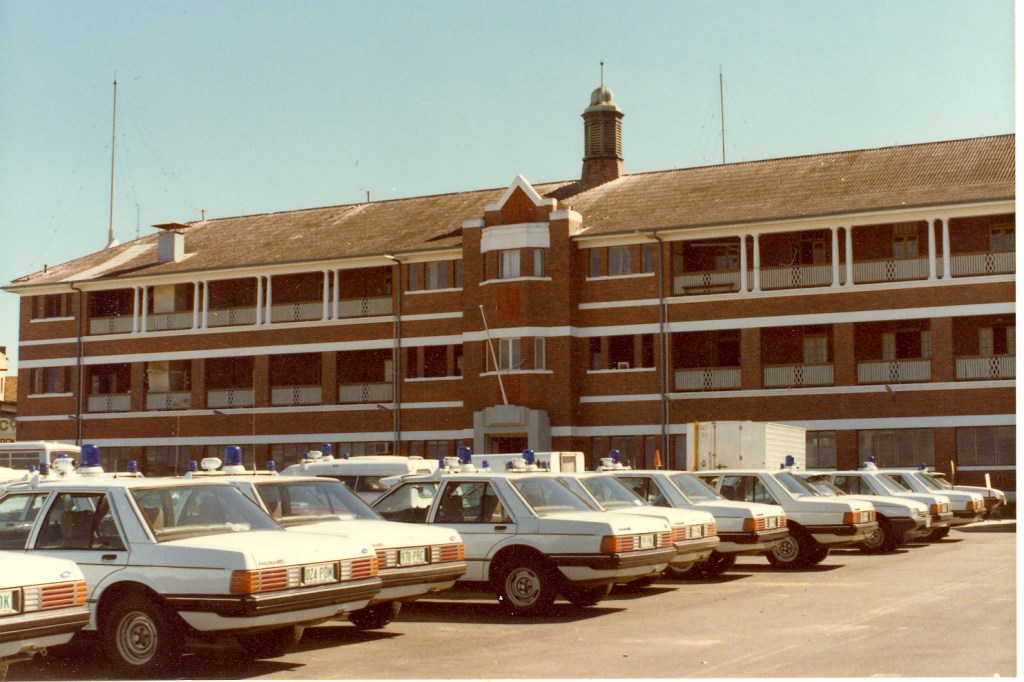
Like many small towns grown large, by the 1980s Brisbane had become corrupt. Small towns do not start out corrupt, they just grow into it. What starts out as the necessity of looking out for each other and a rather less attractive distrust of strangers eventually becomes much more sinister. This corrupt mindset reached its apogee in Brisbane in the 1980s.
Corruption in high places was exposed by a royal commission chaired by a shrewd former judge and lawyer by the name of Tony Fitzgerald QC. The Fitzgerald Inquiry as it came to be widely known was reluctantly set up in 1987 by the National Party’s acting Premier Bill Gunn, when Premier Sir Joh Bjelke-Petersen was out of town, after some courageous investigative work by journalists, especially at the ABC and The Courier Mail, had lifted the lid on some very dodgy, dark goings on in the Sunshine State. The final straw had been a Four Corners television programme on ABC entitled, with a keen sense of irony, The Moonlight State that went to air on the evening of Monday 11th May 1987. It told of the involvement of Queensland Police in protecting gambling and prostitution. However much journalists are derided for wallowing in the gutter, Queenslanders should be eternally grateful for this small, very gutsy group of muckrakers, especially Chris Masters, then of the ABC, and Phil Dickie, reporting for The Courier Mail, who worked with policeman-turned-whistleblower Nigel Powell.
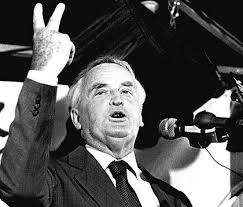
Fitzgerald found endemic corruption existed within public life in the State and set out a template for reforming the system. Some people claimed, including Fitzgerald himself, without presenting any corroborating evidence, that he had only scratched the surface of the murky underworld that so many prominent people had their fingers in. It is very likely that he missed a lot. He never produced evidence on the drugs underworld, for instance, and many people believed there was just as much Police meddling in that business. In Last Drinks, a fictional account of the period, Andrew McGahan told of how corruption extended to the government handing big electrical maintenance contracts to cronies. Nothing of this sort was reported by the Fitzgerald Inquiry or indeed later surfaced, but it is an example of the type of illegal activity that many suspected was going on. There are subtler ways of corrupting the system too. Nudges and winks about post political board appointments, lobbying for changes to safety legislation that benefits supplier companies with close political ties, or union heavyweights tapping companies for ‘slush funds’.
But, despite what crack detectives manage to do in the movies, most investigators say you can usually only find out what people tell you. And there was strong suspicion that some of the bent coppers who turned State’s evidence in the Royal Commission had said only what they needed to, and perhaps stuck the boot into a few innocents as well, to settle a few old scores.
The Police bore a heavy burden of guilt for the existing state of affairs. Evidence showed clearly the disgraced and eventually jailed Police Commissioner Terry Lewis had a particularly close relationship with Premier Bjelke-Petersen, and that he had influenced a whole range of appointments, including some to the judicial benches, which was well beyond the role of a senior civil servant in the Westminster system of government nominally in operation at the time.
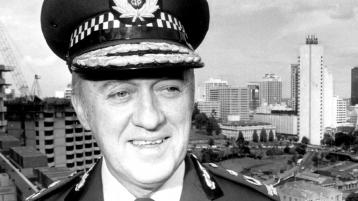
Lewis was friendly too with Queensland Supreme Court Justice Angelo Vasta, who was removed from office by a chastened State Parliament in June 1989 because he had made false allegations and fiddled his income tax returns.
After being squeezed kicking and screaming out of the premiership by his anxious National Party in late 1987, Bjelke-Petersen himself went to trial in 1991 for two counts of perjury and one of accepting brown paper bags full of cash from a businessman. The jury could not reach a decision and so he escaped conviction. It later emerged that the jury foreman, Luke Shaw, was instrumental in forcing a hung jury and preventing a guilty verdict. It turned out that he was a member of Bjelke-Petersen’s National Party. A subsequent enquiry found that two members of Bjelke-Petersen’s defence team had contrived to place him on the jury.
One way or another during the last years of the ‘80s decade it was revealed that corruption had spread far and wide.
In some ways Brisbane brought the corruption that Fitzgerald unearthed on itself. That, of course, does not excuse the corruption of police and politicians, which was egregious. But the protection rackets that were exposed involved sex-for-cash and gambling, activities that people have enjoyed since time began. It would not have been so easy to corrupt the system if there had been more enlightened laws that regulated rather than tried to sweep these matters under the carpet. But Queensland was not a liberal place. The Government ran a ‘nanny state’ that saw itself better able to make decisions about how its citizens lived their lives than they themselves were.
Several policemen (there were no police women involved) took a lot of money for agreeing not to disrupt prostitution and gambling operations, particularly but not only in Fortitude Valley, then the seedy underbelly of Brisbane, not today’s regenerated trendy district. They in effect regulated the sex industry by dictating how brothels could operate. They fixed a rotating schedule of arrests of prostitutes that was agreed with the proprietor pimps so as to present a semblance of legitimate police activity in the vice trade. They took protection money from illegal casinos and from so-called SP [Starting Price] bookmakers.
It was not until the late 1990s that Brisbane got relatively enlightened prostitution laws as recommended by Fitzgerald almost a decade earlier, led by then new premier Peter Beattie. Beattie, who had been closely involved with implementing the Police reforms as head of the Parliamentary Committee overseeing the Fitzgerald-inspired Criminal Justice Commission, which was set up to oversee the Police Service.
The police protection racket – centred in the temptingly named Licencing Branch – was known internally as ‘The Joke’. At its core was a group known as the ‘Rat Pack’. According to evidence at the Inquiry of key member and bagman, Jack Herbert, the only one who chose to sing to the Inquiry like the crooners they were named after, they often extorted as much as $56,000 a month from organised gambling and prostitution between 1979 and 1987 that went into ‘The Pool’. Then there were extra payments of $344,100 ‘on the side’. On his figures Commissioner Lewis filched a total of $611,650, while Herbert, a former London bobby who had joined the Queensland force in 1949, himself pocketed over $3 million. ‘The Joke’ probably garnered more than that, and it certainly extended back further into a least the 1960s.
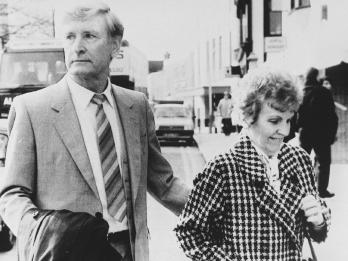
For several weeks from Monday July 27th, 1987 the whole town was riveted by the proceedings in courtroom 29 of Brisbane’s Law Courts on George Street where the hearings were convened. Fitzgerald clearly intended to make an impact by starting at the top. There were some sensational events. The first witness he called was Police Commissioner Terry Lewis who said he had had verbal instructions from five successive Police Ministers and the Premier to turn a blind eye to brothels that were operating in a ‘tolerable manner’ and that it had been policy that prostitution should be ‘contained and controlled’. These claims were unwise and tactically extremely naive because they put his hitherto greatest defenders, senior government ministers and above all Bjelke-Petersen himself, offside from day one. Ministers contacted by the press vehemently denied Lewis’ claims, not surprisingly since so many of them had spoken out loudly against prostitution and the Bjelke-Petersen government prided itself, at least in public, for its moral righteousness. Being soft on ‘law and order’ has never been a recipe for electoral success.
From the perspective of the coterie of corrupt police, matters went downhill from the moment Lewis testified and the hitherto carefully managed ‘Joke’ unravelled under pressure from anxious police witnesses to whom offers of immunity from prosecution were made. By the end of the first fortnight’s evidence Fitzgerald felt able to say the ‘issue is no more whether there was any corruption as how much and by whom’.
The Inquiry spent some time investigating the puerile culture in the Police Force in which corruption had thrived. Sergeant Eric Deveney, for example, told of refusing a bribe from two senior officers. The next day dog turds were left on his desk and ‘Dog’ was written on his notepad. Thereafter he was ridiculed by fellow policemen barking and making dog sounds at him whenever he walked past.
In time, of course, revelations from the Inquiry became almost dull as over 400 witnesses traipsed through its courtroom and the terms of reference and staffing grew. Fitzgerald got a deputy, Patsy Wolfe QC. The enquiry was enlivened from time to time by Fitzgerald’s keen sense of humour.
In testimony, brothel owner Hector Hapeta, dubbed the King of Brisbane’s prostitution in the 1980s, claimed his annual earnings of $56,000 in the previous year came from leasing a small van he had bought five years previously for $5,000 to a Mr Ash in Sydney. Fitzgerald asked: ‘You do not know if Mr Ash is interested in leasing any other trucks?’ At the height of his empire, Hapeta reputedly had an annual turnover of $30 million and paid $1 million to corrupt policeman.
It was never clear from evidence to the Inquiry how much the government had been involved in corruption. Two ministers were mentioned and three were later jailed for fiddling their expenses, including the appropriately named Don ‘Shady’ Lane, a former policeman himself.
The most disturbing connection was the close relationship between Lewis and Bjelke-Petersen. The Premier had appointed Lewis in extraordinary circumstances and contrary to advice, promoting him from Inspector to Commissioner via a very short stay as Assistant Commissioner. Inspector in September, Commissioner in November! Bjelke-Petersen never adequately explained this meteoric rise. And curiously the minutes of the cabinet meeting that made this decision were the only set that Fitzgerald was unable to find.
Former Commissioner Whitrod told Dickie that whenever he tried to talk to Bjelke-Petersen about illegal gambling, he found the Premier already had the information. He talked of ‘Joh’s little clique, one of his protective staff’ within the Police Force.
And we know that Lewis and Bjelke-Petersen frequently discussed a whole host of issues and particularly key appointments to powerful positions, many of which were entirely outside Lewis’ jurisdiction. Suspicion must fall on the now-closed Police Special Branch which has since been discovered to have been collecting information on a wide range of people who had done nothing more than express opinions that did not accord with the status quo seen through the lens of the Police and Government. It is hard to imagine that Lewis did not pass some of the scuttlebutt from this source on to Bjelke-Petersen.
Tony Fitzgerald was not the first or even second choice of the government to chair the Inquiry that Gunn announced and that Bjelke-Petersen did not like the sound of at all. The premier reportedly told Gunn that he ‘had a tiger by the tail and it will end up biting you’. Initially Gunn, possibly as a result of a suggestion from Lewis, favoured a judge thought to be sympathetic to the government, but the Chief Justice, Sir Dormer (Bob) Andrews, let it be known that he did not fancy a judge heading the Inquiry. Attention turned to a Queen’s Council and in particular Ian Callinan QC, subsequently a justice on the High Court of Australia. He effectively recused himself because he had acted for the Government in several high profile commercial cases and thought he might lack the perception of independence. He suggested 46-year-old University of Queensland-trained barrister Gerald Edward Fitzgerald QC, known as Tony because a nun at his school had called him that and it had stuck. Thus was the tiger set loose, at a cost of $300 an hour. Fitzgerald himself thought he might have got the job because he was notorious for nothing and had no interest in politics, according to the veteran crime and law reporter, Evan Whitton.
He handed in his 620-page report on the morning of 3rd July 1989; two years after the Inquiry had started. It was warmly received by the media. Whitton described it as ‘not so much sensational as sensationally brilliant’. He said of Fitzgerald himself that ‘It was obvious almost from the first words he uttered at his enquiry two years ago that (he) had a mind like a piranha; now he appears as supple as a snake, or at any rate the snake charmer’.
As to why he did not keep digging and digging to root out corruption from all Brisbane’s dark alleys, Fitzgerald later said that he had a better appreciation of how big the problem was than the general community. But ‘trying to deal with it is like trying to empty the Brisbane River with a rusty bucket,’ he said. He decided, therefore, ‘to proceed to the point where the Parliament and the people are aware of the need for a new approach, and then to stop to design it’.
He clearly succeeded. To his largely unrewarded credit, Mike Ahern, who had taken over the poisoned chalice of National Party leader and Premier from the discredited Bjelke-Petersen, agreed to implement Fitzgerald’s recommendations ‘lock, stock and barrel’. These, as it turned out, called for sweeping reform to government administration, the criminal justice system and electoral system, as well as in the Police Force itself.
In reality, Ahern probably had little choice but to do so. Politically his options were severely narrowed once Fitzgerald had established the credibility of his Inquiry and the extent of official corruption, but still it took courage, because it incensed his Party and it doomed his government to defeat at the next election.
The Queensland Police Force was a major focus of the Review and Fitzgerald provided great detail in how it should be restructured. My wife at the time had a media relations job with the Police at its headquarters in Roma Street. She got it, like so many get jobs in Brisbane, through a friend, a neighbour.
My wife started with the Police in mid-1989 just prior to the Fitzgerald Report being handed down and just before the government appointed a new police commissioner to oversee reform. Strangely, he turned out to be a ‘Mexican’ from the supposedly despised Peoples’ Republic of Victoria, where he had been Deputy Commissioner of Police. Commissioner Noel Newnham was brought in as an outsider to clean up the Police Force that had been so disgraced by Fitzgerald.
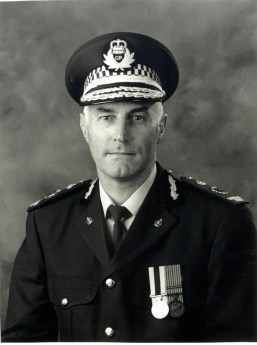
It goes without saying that Newnham never had a chance, even though he struggled mightily in the cause. Police forces the world over are masters at the black arts of incrimination, reputation rubbishing and verballing, and in recent times the darker forces in the Queensland Force had had an easy run.
He was initially, at least to the outsider like me, a breath of fresh air, if somewhat humourless and too earnest. He had an enlightened view of how a police force should operate in a modern democracy. In a novel and probably unique position for a senior Queensland policeman, he believed that society should tell policemen and woman what they wanted and expected of them. Until that time, various police spokesmen and Police Union representatives had not been backward in telling the public how things ought to be. Symbolically, ‘Force’ was replaced with ‘Service’ in the Police name.
I recall Newnham saying on radio that it was not realistic to expect policemen to break the law by, for instance, smoking dope during undercover operations, unless it was specifically approved by Parliament. This seemed odd initially. How could an undercover cop do his job if he could not break the law? Is that not what being undercover is all about? Well, on reflection, no, it is not. Newnham was laying down an important marker in establishing that there were no circumstances in which police should break the law. If the community wants coppers to bend the rules when operating undercover it should introduce an explicit enabling law. This came as a shock to many policemen (and it was mostly men, women did not thrive in the matey, closed police ranks of the time) as my wife would later testify during pillow talk at home. But Newnham was not just playing to the gallery. What you saw is what you got. He said the same things in private.
He was also trying to introduce an open culture in which the public were allowed to see what was going on, warts and all. This, he reasoned, was important if society was to make judgements about what it wanted from its police service. While this open, non-defensive approach was especially refreshing, it was also, of course, threatening to those on the inside. They had to be doing and seen to be doing a professional job. The public will forgive its servants for problems in society if they are clearly doing their best. That might have been the problem for many Queensland policemen at the time. They were not doing their best, except in accruing maximum personal benefit. And of course the bad apples spoiled the whole barrel.
Newnham was often not able to support individual policemen, perhaps because they were corrupt or they were not doing their best, or perhaps because they stood idly by while others took advantage of the system. The old saying that ‘for evil to survive, good men must do nothing’ seemed to be especially apt at that time.
So, because he was a ‘Mexican’, and because he was trying to clean things up, he was unpopular with large swathes of police and with the unseen underworld in league with the probably few outright corrupt policemen still in the system.
Newnham’s trouble was intensified by his political naiveté. Unfortunately, he was not appointed by the new Labor Party government of Premier Wayne Goss, so was viewed with some suspicion by the Administration, not, I think on grounds that he might be corrupt himself, but because he was perceived as being from the other side of politics. He was appointed in the dying days of the previous conservative government which had promised then opposition leader Goss a say in the appointment. But in the event, the government announced that Newnham had got the job while Goss was interviewing one of the other candidates on the short list.
Newnham’s loose cannon style of appearing on radio talk shows ‘telling it like it is’ could often cause short term political problems for a Police Minister who did not necessarily share the same policy agenda. Newnham’s big blunder was to approach Goss directly with claims about improper behaviour by the Police Minister Terry Mackenroth, a key factional ally of Goss and an important man in the Labor Party caucus.
Newnham alleged Mackenroth had accepted a cash donation from dismissed Supreme Court Judge Angelo Vasta in return for a political favour. The claim, vehemently denied by Mackenroth, was that Vasta had given Mackenroth money while asking that an incoming Labor government reconsider his dismissal from the judicial bench. The Australian Federal Police bugged Vasta’s brother-in-law Santo Coco’s office (he and Vasta were facing bribery charges at the time; Vasta was later acquitted). They recorded a phone call with Mackenroth that referred to the donation. A transcript of the taped conversation was later released and much like the Nixon tapes about Watergate, it verges on the incoherent and does not clearly implicate anyone. Mackenroth later produced a receipt to show that money he received from Vasta had been forwarded to Labor Party coffers.
So the knives were out for Newnham; he never recovered the government’s confidence, if indeed he ever had it. And while one or two knives were in political hands, most were in the clutches of disgruntled policemen.
First to launch an attack was a clearly furious Mackenroth who raised allegation of misconduct by Newnham with the Criminal Justice Commission, which investigated and rejected them.
But a later misconduct tribunal investigation headed by Richard Chesterman QC found Newnham guilty of failing to refund $2,102 in airfares advanced to attend an Interpol Police conference in Ottawa, Canada. He had refunded all the many other airfares advanced on this basis, and from the less-than-fully-informed sidelines, it looked like Newnham had simply forgotten this one.
But this did not seem to be good enough and it was recommended Newnham be sacked even though Chesterman QC said he did not believe he had set out to keep the money.
‘I do not conclude that Mr Newnham intended never to pay the amount but it is my judgment that he decided not to pay unless and until he was presented with something in the nature of an invoice from Q.P.S,’ the judgment said.
As Courier Mail journalist Chris Griffith commented at the time, ‘This has left many wondering whether Mr Newnham deserved the harsh penalty of dismissal; indeed no motive or advantage was established for his decision to hold onto the money’.
After much angst, including a rally called in support of Newnham, Chesterman QC’s finding was overturned on appeal to the Supreme Court and Newnham was reinstalled as Police Commissioner. Although in another unsavoury twist to the tale, the CJC was accused of running dead on the issue in the Supreme Court. It was said about town that CJC head Sir Max Bingham, another appointment made in the dying days of the previous conservative government, and Newnham were too close and that the CJC was very keen to see Newnham continue. Indeed, they probably were, because they saw him as an honest cop trying to reform the system; it doesn’t seem much of a crime.
But it was to prove a temporary lull in the campaign against him. Towards the end of 1992, the Police Union sponsored a ‘no confidence’ motion against Newnham that was upheld despite accusations of irregularities in the ballot’s conduct. Ironically in the 1970s, the same fate had been meted out to another reforming Police Commissioner, Ray Whitrod, but never to jailed corrupt commissioner Terry Lewis. At best the Queensland Police Union has little sense of strategic public relations.
And it was disturbing in Brisbane at that time that there was little evidence of widespread outrage at the way we as a society were treating a palpably honest cop trying to sort out the legacy of all the bent ones. It was almost as if we preferred the corruption of the Lewis era. Probably though, it was just apathy amongst a public that had become sick and tired of the whole sorry mess that seemed to have been going on for years. And, as I recall, with claim and counter claim, it was no longer easy to know who to believe.
Not long after the vote of no confidence Newham did not seek renewal of his contract as Police Commissioner and Goss did not press him to stay on. He returned to live a relatively reclusive life in Melbourne.
Curiously the legal profession was mostly quiet during this time, perhaps reflecting that Brisbane was too small a town in which to stick your head above the parapet. It was to invite someone to kick you in the head.
But soon-to-be deputy Premier Tom Burns said in Parliament in 1989 after members had voted overwhelmingly to dismiss Angelo Vasta from the Supreme Court: ‘Today this parliament heard an impressive reply of almost two and half hours by Mr Justice Vasta to a unique report that identifies him as a liar, perjurer, a tax cheat and an unreliable witness, but at the same time finds him to be a good and honest judge. That says something about the judicial system in the state’.
On the other hand, there is some evidence – such as the constructive role played by Ian Callinan QC – that the legal fraternity had played a key role in the earlier Fitzgerald Inquiry. The ABC’s Chris Masters said he thought the Brisbane legal community had ‘had corrupt police up to their eye teeth and they were very keen to get the Fitzgerald Inquiry right’.
So where does this leave the Police Service in the Sunshine State? Newnham was succeeded by a Queenslander, Jim O’Sullivan, who had been a chief investigator for Fitzgerald and was widely seen as clean. Fitzgerald said he was above reproach and urged that he have a major role in the clean-up. He did not bring the same open style to his command as Newnham – maybe he knew the Service too well to lift his public profile too high, tall poppies get knocked off, and he was not a natural communicator – but he seemed to guide the Service to a more modern conception of itself.
Fitzgerald and the immediate aftermath was a pivotal time. A correspondent using the moniker Dragonlady captured the mood when in 2003 she posted an appreciative note on the ABC website reminiscing about Chris Masters’ The Moonlight State show that started the corruption-busting ball rolling. She said:
‘Those of you who have never been affected by a police state have no understanding of the impact it can have on your daily lives. If you had strong convictions about social justice, civil liberties or were anti-nuclear and tried to speak out you were harassed and intimidated at every turn. Knowing that your politicians and big business people were openly corrupt and yet Queenslanders seemed to accept it was very difficult. I will never forget the amazement I felt on watching that Four Corners program and finally seeing the whole sorry mess documented, dramatized and detailed for all the world to see. Chris Masters helped to bring truth to Queensland and it is now a very different place because of it.’


Leave a Reply