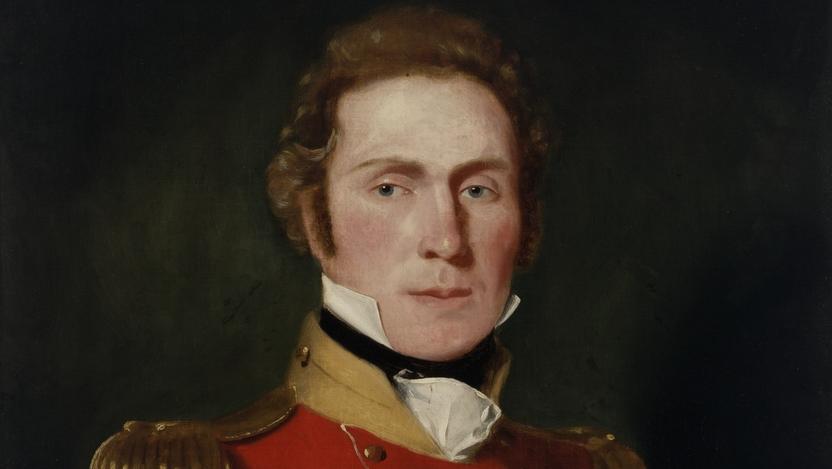
Seldom has a man who achieved so much been so vilified as Captain Patrick Logan, the second commandant of the penal colony at Moreton Bay, and some say the founder of Queensland. And that vilification is not the result of applying 21st Century sensibilities to events 200 years old.
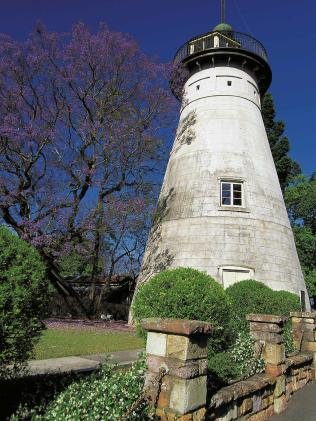
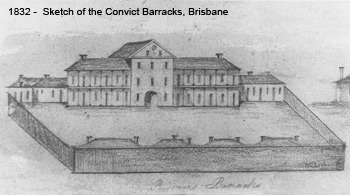
Logan was posted to what was to become Brisbane in 1826, less than a year after the first convicts were sent.. He was a good administrator, set about organizing buildings and farms. He explored extensively and did much to extend the geographical and botanical knowledge of the region. He carried out a large programme of public works. He was responsible for building the Convict Hospital, the Prisoners’ Barracks and the Military Barracks in 1828, and the Superintendent’s House, later the Railway Engineer’s Office, and the Windmill, now the Observatory in Spring Hill, in 1829. See here for a list of achievements
Yet he has was renowned for the harsh regime he ran. The Courier Mail ran a story in April this year under the headline Cruelty of Captain Patrick Logan knew no bounds in Moreton Bay convict settlement detailing some of the tough punishments inflicted on prisoners at Logan’s direction. And it is not just written with the benefit of hindsight.
In an article in The Queenslander magazine in 1891, irreverent journalist J.J. Knight described Logan as: ‘overbearing in his manner towards the prisoners, and always willing to meet the exigencies of a small offence by ordering punishment at the triangles, it is not a matter of wonder that his reign was spoken of as one of terror. It is said that several designs on his life were only averted by some lucky or miraculous circumstance.
‘It was not necessary to commit a heinous offence to merit the displeasure and prescribed punishment of the Commandant; the faintest murmur against a task allotted or inability to perform the work was sufficient to secure for the unfortunate delinquent from 50 to 100 lashes, and these were not laid on with a light hand’.
When he was murdered in mysterious circumstances in October 1830, the Moreton Bay convicts rejoiced, their exuberant singing ringing out all night long.
Yet I believe insufficient attention has been paid to early influences on his attitudes, particularly his time in the British Army. Scottish-born Logan, like many of the British officers that were sent to the fledgling colony of New South Wales in the 1820s, had served under the Duke of Wellington in the Peninsula Campaign or at Waterloo. He joined Wellington’s forces in August 1811, as a nineteen-year-old ensign. He was involved in several major actions against Napoleon’s French troops in Spain and Portugal.
During this time he would have witnessed first hand appalling conduct by troops under Wellington’s the command. Here are two examples.
After bloody taking of the town of Ciudad Rodrigo from the occupying French in January 1812, British troops celebrated wildly. Many were incapably drunk, firing at random at doors and windows in the square beneath the 12th Century cathedral, they killed and wounded some of their comrades. Their officers were unable to control them, even while bashing them about the head with the butt ends of broken muskets. There was pillaging on a grand scale of joints of meat, loaves of bread, clothing, and shoes that the men hung off their bayonets as they left town next morning.
After the assault of Badajoz in Spain in April 1812, things were worse. Soldiers broke into houses, dragged cases of wine into the streets, raped women, robbed and murdered men, bayoneted children. A young subaltern, Robert Blakeney, wrote of the ‘shrill shrieking of affrighted children, the piercing shrieks of frantic women, the groans of the wounded, the savage and discordant yells of drunkards firing at everything and in all directions …
‘Every house presented a scene of plunder, debauchery and bloodshed, committed with wanton cruelty on the persons of defenceless inhabitants by our soldiery; and in many instances I beheld the savages tear the rings from the ears of beautiful women who were their victims, and when the rings could not be immediately removed from their fingers with the hand, they tore them off with their teeth…
‘Men, women and children were shot in the streets for no other reason than pastime; every species of outrage was publicly committed in the houses, churches and streets, and in a manner so brutal that a faithful recital would be too indecent and too shocking to humanity. Not the slightest shadow of order or discipline was maintained; the officers durst not interfere … A sergeant struck me with hos pike for refusing to join in plundering a family; I certainly snapped my pistol in his face, but fortunately it missed fire or he would have been killed.’
This rioting continued for three days.
Wellington described his men as ‘the scum of the earth’ since ‘none but the worst description of men enter the regular service’. There was ‘no crime recorded in the Newgate Calendar’ that was not committed by these soldiers.
The ease and speed which these men quickly descended into wild, uncontrollable mobs must surely have been on Logan’s mind when he was in tenuous charge of over 1000 convicts in remote Moreton Bay.
A detailed report of the life of Captain Logan can be found here.


Leave a Reply