After much agitation around Moreton Bay, the British Government in London allowed the region north of the Tweed River to break away from New South Wales and become a colony in its own right in 1859. The head of state of all the Australian Colonies, Her Majesty the Queen, immodestly decided that it should be called Queensland, presumably because Victoria was already in use in the Antipodes. She declined the suggestion of Cooksland. The capital, right on the southern border of the new state, was to be Brisbane, thereby immediately alienating all of north Queensland.
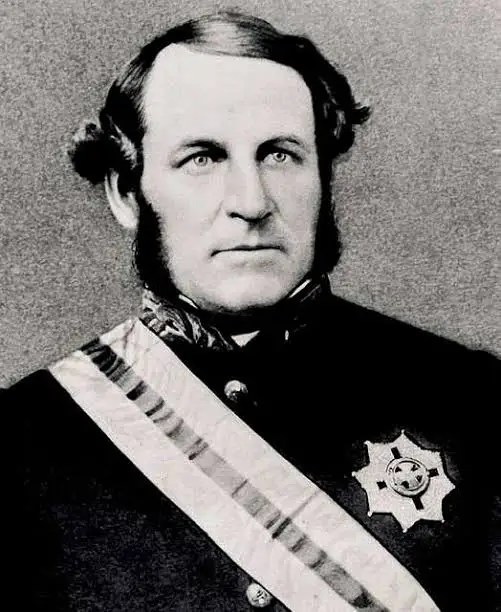
The newly proclaimed state, which had a settler population of 23,520, needed a government and a local head of that government to represent the Crown. It was said at the time that the British Chancellor of the Exchequer William Gladstone, an influential member of the Liberal Party who would go on to be a long-serving Prime Minister, favoured a promising young man who had helped in one of his election campaigns. And so it was that 38 year old Sir George Ferguson Bowen was appointed the first Governor of Queensland. He was a highly educated, intellectually minded official not renowned for incisive decision-making who, like many later governors, came from a Protestant Irish Establishment background.
He arrived in Brisbane from the Ionian island of Corfu in Greece, a well-fortified English staging post for the recent Crimean War, where he had become accustomed to authoritarian, military rule. He brought with him the Contessa Diamantina Roma, Lady Bowen, a noblewoman from a distinguished family that traced its origins back to 13th century Rome.
The couple arrived in Moreton Bay at sunset, Friday 9th December fresh and eager for their challenge. They were met at the mouth of the Brisbane River by a welcoming party in a small Royal Navy paddle-wheel steamer, Breadalbane, whichtook themupstream the next day. I was a hot 33 degree celsius day. All along their journey up the river they were enthusiastically greeted by paddle steamers filled with sightseers, fireworks, bunting and flags.
Then 4000 people lined the river banks near the Botanic Gardens and gave them ‘a most wholehearted and joyous welcome’, after which they were taken by vice-regal carriage along dusty streets to the temporary vice-regal residence – Adelaide House, vacated and leased to them for three years by owner Dr William Hobbs, the Government Health Officer and Surgeon. (It is now The Deanery, St John’s Cathedral). There Diamantina held 16-month-old daughter Nina high over Adelaide Street for the crowd to see. Later that day, from the same veranda, Sir George read the proclamation of the State of Queensland.
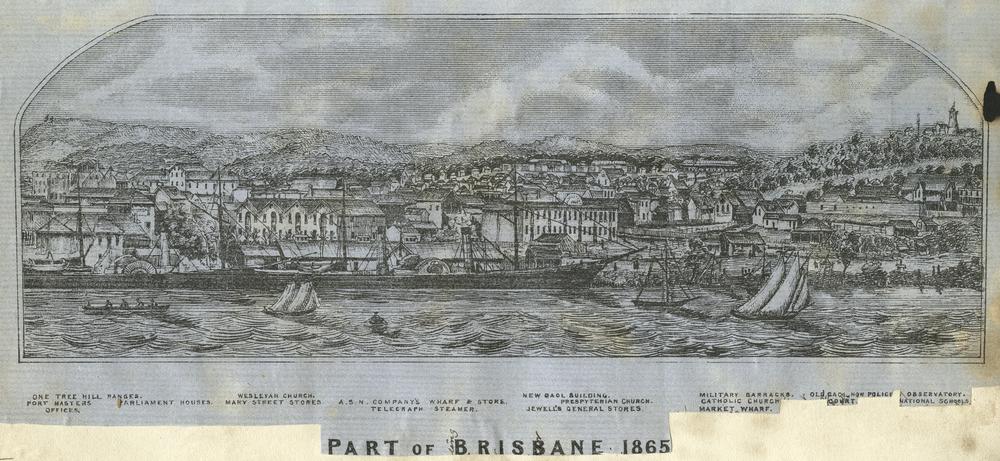
The Brisbane of 1859 into which this sophisticated couple arrived to preside over was, in journalist J.J. Knight’s words, ‘yet but a clearing, its streets so many eminences and depressions, with creeks intersecting at various points, and trees, and tree-stumps blocking the way to convenient locomotion – not three miles of road had been made.
Yet while the general euphoria and celebrations continued in the last month of 1859, Bowen was a Governor without a functioning government, nearly all previous ‘administering’ having been done in far off Sydney.
In other colonies of the British Empire, which was then approaching the height of its worldwide reach and abundant wealth, the early stages of a new government was invested with autocratic powers, supported by military force, the guidance of established British officials and funding from the Imperial Treasury in London. Queensland however started out with full-blown parliamentary self-government, yet without having any men of legislative or official experience; without a single soldier from the Imperial Army and without a single shilling from the Imperial Treasury. It was, in sum, ‘a somewhat rash experiment’.
Bowen later described the establishment of the colony as ‘most peculiar … exceptional beyond precedent in the history of colonisation’. It was, he said, colonisation ‘on the cheap and at arm’s length’.
Upon separation from NSW, the embryonic Government had no money. Already in debt, Queensland’s Treasury was literally empty. A thief broke in several nights after Bowen’s arrival and stole its remaining 7½ pennies, or so it is said. To be sure, negotiations were underway with NSW about wresting back the taxes and charges generated in Queensland to be paid to the new Government. Queenslanders reckoned this was about £10,800, but their counterparts in Sydney were of the view that Queensland should share accumulated government debt, which they said would be greater than revenue.
So here was Brisbane, the capital of a brand new state, a colony of the mighty British Empire without a decent hospital, without a suitably gracious home for the new head of government, no Supreme Court or Parliament buildings. Perhaps befitting the genesis of settler Brisbane, Parliament met, eventually, in old convict barracks on Queen Street.
Historian H.J. Gibney in Queensland Political Portraits 1859 – 1952 described the scene just prior to separation. ‘Life on the frontier of civilisation, 600 miles from Sydney, was still fairly raw. Although it housed the still-sketchy administration, Brisbane with a population below 10,000 was by no means the centre of the new society, for the squatters of the Darling Downs preferred Ipswich to the erstwhile prison on the Brisbane River. Their wealth and intelligence made Ipswich a strong rival. The artisans and merchants of Brisbane, or, to be more precise, the four scattered, straggling villages of North Brisbane, South Brisbane, Kangaroo Point and Fortitude Valley, preached a liberalism that was principally a hostile reaction to the arrogant exclusiveness of squatting Ipswich.’
Yet for all the colony’s political and administrative innocence, government business was handled with correct procedures and due process, as might be expected of an outpost of Empire, impoverished though it was, whose initial office bearers were steeped in British traditions of administration. Bowen set up an Executive Council and in the early days ruled by decree albeit after consultation. Official notices were published in the Government Gazette.
Those early Executive Council meetings could be tedious though. His private secretary and soon to be Colonial Secretary – in effect the first premier – Sir Robert Herbert wrote home saying that his nearly daily meetings with Bowen were ‘time consuming, wasteful and sometimes boring’. The relationship between the two English gentlemen deteriorated over the years, although good manners masked much open expression of it. Herbert said privately that Bowen was ‘impatient, frustrated and disappointed by failing to receive early promotion … to a more prestigious and senior Governorship’. By 1866, he wrote in a letter that ‘Bowen’s lucid intervals are rarer than they used to be’.
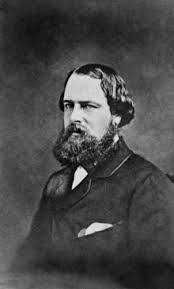
Twenty-eight-year-old Herbert, grandson of the Earl of Carnarvon, had little or no political experience, and was a comparative novice in administrative matters himself, though he came with a solid Oxford education and his aristocratic background. Yet he had promise.
The Moreton Bay Courier reported, somewhat tongue in cheek after a minor political misstep, said he was ‘young and inexperienced, and after all very painstaking and industrious, and so we have forgiven him for this once, and prevailed upon his Excellency to again take him into favour’.
A key early task for the neophyte Bowen Administration was to organise elections for the lower house of Parliament, to be known as the Legislative Assembly. They were scheduled for two weeks from 27th April 1860. The first fifteen members of the upper house Legislative Council were appointed by the Governor.
To enable those elections, NSW Governor Sir William Denison had issued a proclamation by which he constituted sixteen electoral districts and allotted to them 26 Members of Parliament. North Brisbane was given three members, South Brisbane one and Fortitude Valley one, while Ipswich, with a population of only 806, was allotted three, West Moreton three, and East Moreton two.
Other pastoral centres were similarly treated with the result that Denison was criticised for being unfair and inconsistent. It was said he had set out to give the pastoralists an overwhelming preponderance in the legislature, so as to strengthen the hold that their connection with the banks and agency houses of NSW had upon Queensland. This pastoral dominance was to have resonance in Queensland politics for 140 years.
J.J. Knight said at the time: ‘The allotment of members certainly bore this complexion, though it is on record that a few months before, when deprecating Separation, he declared that he did so because “the pastoral interest had no fixed or abiding hold in the country.” For this he was sharply criticised by the people, and rebuked by the Colonial Office, and as more than one writer has affirmed, forgiveness was not with Sir William Dennison a prominent virtue.’
To the fledgling Administration’s credit, the new parliament sat for the first time on the 22nd May 1860, just six months after Bowen and Herbert arrived. It was opened with the pomp and ceremony inherited from the British mother parliament, with the speech from the throne delivered by Bowen.
A contemporary observer characterised the early Parliamentarians, somewhat harshly in the circumstances of the frontier state, as ‘woefully barren [in] statesmanship’ and generally lacking in ‘knowledge or ability’. A civil servant who arrived in 1862 found the small governing class ‘imbued with great ignorance and strange ideas that would astonish those who think and read’.
As Colonial Secretary, Herbert’s first task was to establish his authority in the Legislature, where he faced fierce opposition from Scottish-born free settler Arthur ‘Slippery Mac’ Macalister, an influential Member for Ipswich, and eloquent, bull headed Englishman Charles Lilley. But the opposition was disorganised and lacked experience of parliamentary procedures and tactics.
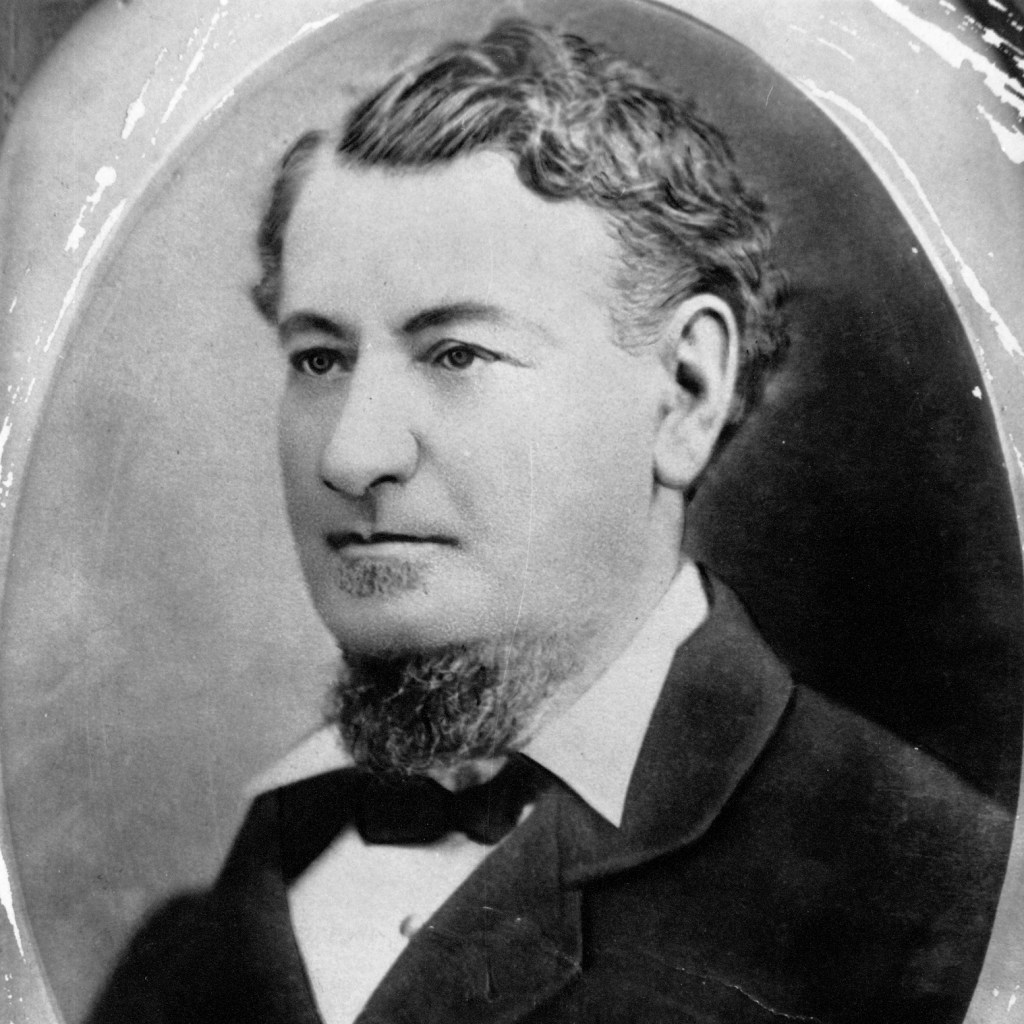
Gibney reports that at 44, Lilley was ‘handsome and popular. He was known as a gay dog with a dilettante interest in culture. His wife made little public impression, probably because of the twelve children who had been arriving almost annually’.
Macalister, on the other hand, had a ‘genius for intrigue’. The anonymous ‘Stylus’, writing in the Moreton Bay Courier, captured some of the flavour of those early legislative days in describing Macalister as being ‘singularly ineffective’ as a debater.
‘He was never very fortunate as a speaker, at our frequent public meetings, but he was nevertheless heard with tolerable attention because of his efforts in the cause of separation. His voice is shrill and dissonant, and his sentences are jerked out in a clumsy and ungainly style which deprives them of half their weight.
‘A statesman, in the true sense of the word, Mr. Macalister can never be, as, although well educated, he lacks that mental vigour, that grasp of intellect, that keen appreciation of men, and clear insight into things, which a true statesman must have. His volition is far too feeble to qualify him for leadership in the House, and he will always rank as un homme mediocre – a piece of very moderate calibre in our battery of “great guns”.’
The Newspaper’s astute editors, no doubt as cynical about politics as their modern day counterparts, would have been unsurprised when Macalister was elected the second premier of the state in February 1866.
Parliamentary procedures were little understood, but, in keeping with their shared British heritage, at the first sitting of the new Parliament the members agreed to adopt the rules of the House of Commons, as an interim measure, before setting their own.
The inaugural speaker of the Legislative Assembly, St. George Richard Gore, was moved to say: ‘If the members of the House would act up to these rules, instead of imitating the legislators of NSW, they would exemplify to the whole world what the good sense and good feeling of Anglo-Saxons could do’.
The Moreton Bay Courier was not as hopeful. It reported that the Speaker intended ‘to keep strict order, and to treat the new boys in a summary manner, if they do not behave. He says if he cannot rule by “may”, he will rule by “might”, which is a fair joke for a Speaker to make, and we here record it accordingly’. The Courier itself mocked that the Speaker ‘has had a quantity of lead put into the top of the mace’; to keep the potentially rebellious on their best behaviour.
Apart from broad and often wavering town versus country interests within their ranks, there was no initial sense of party formation or much hint of political principle among them. Politicians crossed the floor with ease, engaged in prolonged and acrimonious personal disputes and usually put opportunism first. Party politics did not appear in the Parliament until 1879 and then it was patchy. Elections only began to take the form of clear party-political contests shortly after the turn of the 20th century.
As a result and because there was so little established local government, those first parliamentarians tended to behave as individual benefactors, lavishing promises of public works on their numerically small constituencies in order to get elected.
In the first year of the new Parliament, it was estimated that the State’s revenue would amount to about £160,000 (about $10 million in today’s money), raised mostly from customs charges, and the sale and renting of land. This was at a time when the top civil servant, Collector of Customs, received a salary of £600 a year and a senior judge got £2,000. Total estimated expenditure was £149,319, and thus it was forecast that they would have a budget surplus of £11,481.
Despite this limited revenue, spending continued apace, including on uncommercial railway lines, so that by 1892, the state had the highest per capita debt in the British Empire.
Meanwhile Brisbane Society was reinvigorated, led by the aristocratic Bowens, imbued with the etiquette of high society. It was said that Lady Bowen carried out her official duties with self-discipline, conscientiousness, compassion and aplomb. Her charming manner endeared her to the colonists and throughout her eight years in Queensland she was noted for her beauty, elegant clothes and hairstyle, no doubt not so easy to maintain in the dust and heat.
Over the next fifty years, there were fluctuating fortunes for the capital of the new state, which had started out broke and with precious little support from the Mother country. But, with the pioneering spirit and stoicism, the good burghers of Brisbane built a substantial city.
In the last years of the 19th Century J.J. Knight wrote: ‘in a single lifetime -1824 to 1897 – Brisbane has been converted from primeval forest to cathedral city; from the haunt of the felon to the home of the freeman. Truly three score years and ten have brought a remarkable transformation!


Leave a Reply