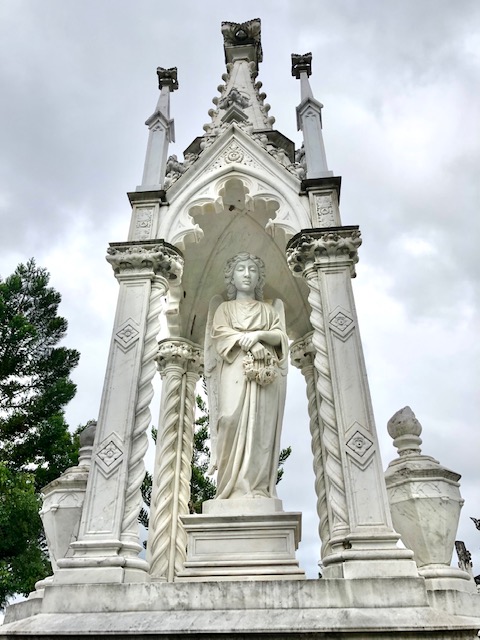
It was near a seedy hotel in Kangaroo Point that a brutal murder and robbery took place in the early hours of Sunday 26th March 1848, subsequently so thoroughly investigated and reported in rich detail by Rosamond Siemon in her book The Mayne Inheritance. It was a murder that created a local dynasty and a malignant stain that ultimately destroyed it. The dynasty was built by Irish immigrant Patrick Mayne and it was eventually destroyed by madness and shame, but not before it controlled a mighty property empire in Brisbane and had donated the land on which the University of Queensland now stands at St Lucia. And an innocent man was hanged for the crime.
The victim was Robert Cox, a timber cutter, who a few days before had arrived from the Tweed River area with a friend, Richard Smith. In the pre-dawn hours on Sunday he had been stabbed in his right side, his chest, neck and belly by a knife which left wounds an inch wide and three inches deep. His body had been expertly butchered and dismembered.
Early Monday morning a boatman and his family, rowing down the river, were horrified to see the legs and loins of a body on the riverbank below the high water mark. The police, in the person of Constable Murphy, were summoned and a short while later he found the arms and upper torso in long grass some three metres away. A crowd gathered and began searching for the dead man’s head. A dog eventually led them to an unfinished building nearby where they found Cox’s severed head wedged between two timber beams. His intestines were discovered down a well. The body parts were assembled and laid out in the nearby Bush Inn – directly under where the Story Bridge is now – and the local surgeon was called in to determine how Cox had died. From then on, the police investigation was comprehensively bungled.
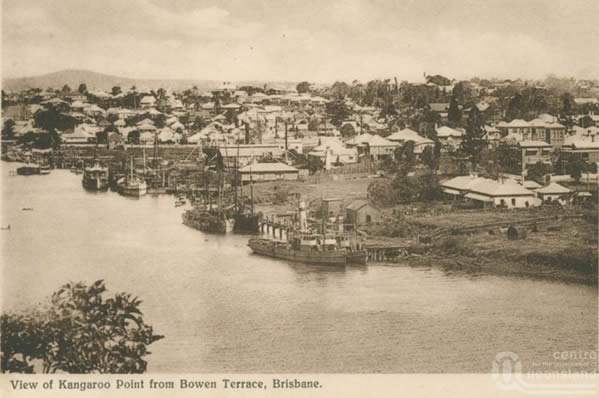
Firstly, seven people, all with some connection to the dead man and who were in the gathering crowd, were arrested on suspicion. Patrick Mayne was not in the crowd.
On the night before the murder, twenty four year old Irish immigrant Mayne, a free settler, a butcher at ‘Tinker’ Campbell’s nearby slaughterhouse, was drinking with two other local butchers, William Lynch and George Platt. Yet he stayed away from the morning’s hubbub – perhaps the only person who did. He only appeared three days later when he was called as a witness by a hastily convened grand jury which was considering who should be charged with the murder. When he did so he gave surprisingly precise times of what he had done on the Sunday, the night in question. In retrospect some thought this was suspicious, as he had been drinking quite heavily.
The police in due course released six suspects and the grand jury settled on William Fyfe, a friend of the timber cutter Cox and a chef at the Sutton Hotel, based on sketchy, circumstantial evidence, not the least of which was that there did not seem to be a motive. He was sent for trial in Sydney, where he was convicted and hanged. He professed his innocence to the very end.
It later transpired, according to his friend Richard Smith who had travelled with him, that Cox had sold about £350 worth of cedar timber in Tweed before his arrival, a substantial sum of money in those days. This money was never found.
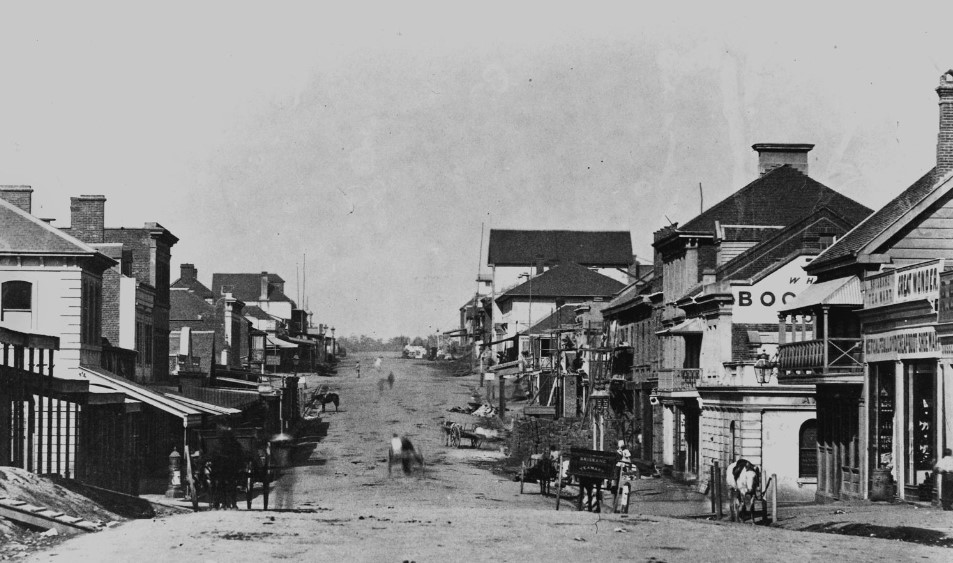
Eighteen months later, Patrick Mayne, a big, powerful man with a temper on a trigger finger, up to this point a poor butcher working in a slaughterhouse for a pound a week, bought a butcher’s shop in Queen Street, in the middle of town. We do not know for how much, but another business in Queen Street sold for £240 at around the same time. Mayne turned out to be a canny businessman and through shrewd land dealings became a very wealthy man. He eventually accumulated 1,700 acres in over fifty areas of Moreton Bay, more than half in Brisbane.
Then on his deathbed in August 1865 – seventeen years after the murder and at the age of forty one – Patrick Mayne confessed to the murder. He was a Catholic, so perhaps he was hoping to make his peace with his God. His wealth passed to his three male children, not his two surviving daughters. Yet a stain hung over the family. None of the five children married or had children. It has been said that they believed there was a strain of madness in their genes; that they made a pact to remain unmarried and abstain from parenthood – and so they did. In fact, two of the children did have identifiable mental health problems, one eventually committing suicide.
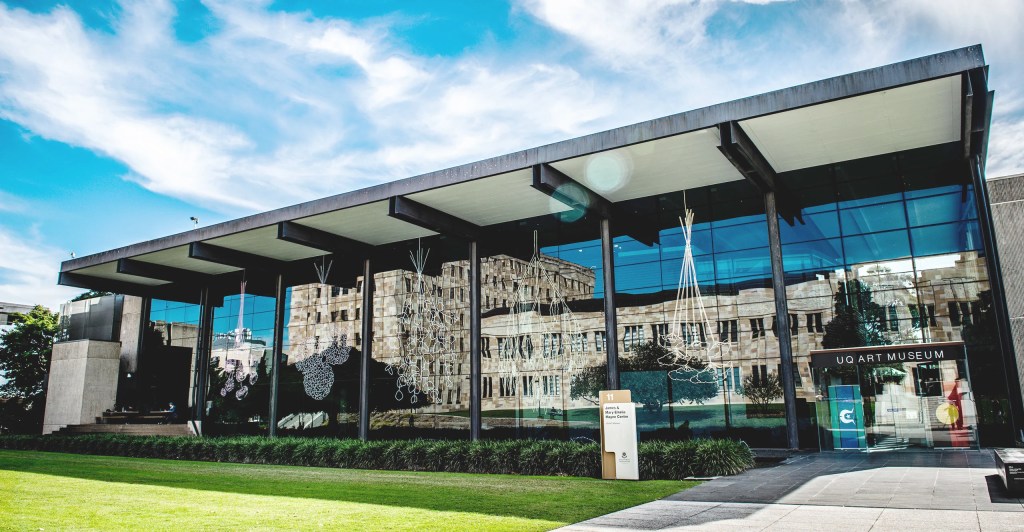
The last surviving son, James Mayne, made a large donation to the University of Queensland which it used to buy the land on which the primary campus is now located at St Lucia. It was a noble deed born 80 years before in brutality and treachery. And with James’s death at the age of seventy eight in 1939, the short-lived dynasty passed into history. The University commemorates the generous donation through its art gallery housed in Mayne Hall


Leave a Reply