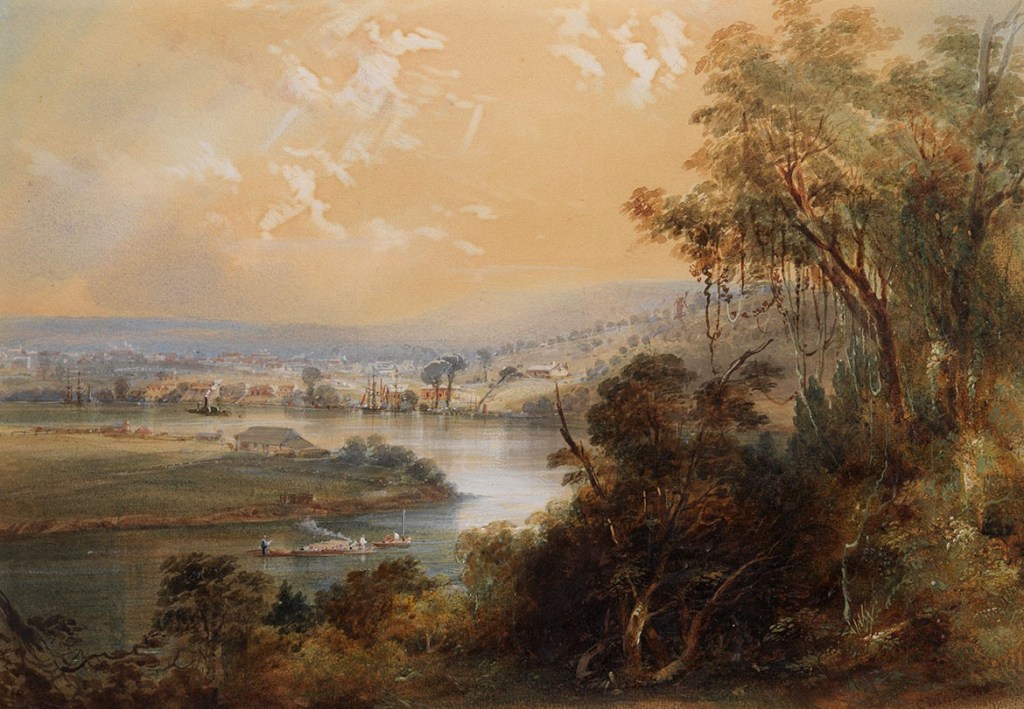
The first European settlers arrived in Brisbane in 1824, just over 200 years ago. It was an altogether messy, poorly planned affair.
Lieutenant James Cook sailed past Point Lookout on North Stradbroke Island on 15th May 1770 in the British Royal Navy research vessel HMS Endeavour on his four-month journey mapping the east coast of Australia. But by all accounts he did not enter the broad area of water he named Morton Bay, after the president of the Royal Society, Lord Morton. A later spelling mistake in a report of the event created Moreton Bay. He saw no evidence of the great river spilling into it.
Neither did his Royal Navy colleague Captain Matthew Flinders when he was surveying Moreton Bay 20 years later. He touched down in Pumicestone Passage, Redcliffe and Coochiemudlo Island, a small isle in the southern part of Moreton Bay. But he too missed the big brown river.
While this might be surprising to modern eyes, with the port of Brisbane nestled at the river mouth, it was not so clear 200 years ago. One contemporary noted in his diary that ‘the thick mangroves at the entrance and its low shores completely masks it, and it is not observable a mile distant’.
In 1823 – fifty odd years after Cook’s fleeting visit – Sir Thomas Brisbane, the Governor of New South Wales, sent forty year old Lieutenant John Oxley to explore the northern stretches of the then much larger New South Wales, to find and select a spot for a tough new penal settlement.
After looking around the Tweed River area, Oxley moved north into the wide expanse of Moreton Bay. There he found the Bay received the waters of a large and navigable river, immediately naming it after Brisbane. He left his sailing vessel The Mermaid anchored in the Bay and, with a longboat, rode the incoming tide and current upstream. Before sunset he had travelled about 20 kilometres up river and had been delighted by the richness of the scenery and the magnificence of the timber, a vital raw material for any new settlement and for shipbuilding. He set foot on land at what is now North Quay at the southern end of what became the city centre, though there is some dispute about this. He may in fact have stepped ashore a little further west in what is now the inner city suburb of Milton.
On the following day he navigated 30 kms further inland and found the river to be broad and deep enough to be navigable for vessels of considerable size. He had found his site. His favourable report to Governor Brisbane on his return to Sydney was quickly followed by plans for the formation of a penal settlement.
The new gaol compound was to be a place for hardened convicts. Thomas Brisbane had instituted a new policy of cracking down on repeat offenders and of getting tougher on troublesome convicts. He evidently thought some convicts had had a far too easy time of it under the more compassionate regime of previous Governor Lachlan Macquarie.
Moreton Bay on the Brisbane River was to be established as a penal colony for the worst convicts – so-called ‘incorrigibles’ who had reoffended while in Sydney.
These were men like Peter Killen. He started life as a dirt-poor farmer’s boy in Ireland. At just 20 years old, the blue-eyed, fair complexioned boy-man was sentenced to seven years’ transportation for picking pockets, a penalty no doubt compounded by his twenty six previous convictions. If he behaved himself, he would have been eligible for a ‘ticket-of-leave’, known as parole these days, after four years. But this was beyond him. He is first recorded as being AWOL. Three years later he was sent to Moreton Bay for being ‘an accessory to robbery’. He was freed after his seven years’ incarceration, but three months later was back in court charged with theft. A Sydney Gazette court reporter noted disapprovingly that his case ‘affords another of those sad instances of hard swearing which so often disgrace our Courts.’ Killen was sentenced to a year in gaol this time. Free again he reappeared in court not long after charged with ‘bushranging’, a particularly serious offense, the sentence for which was death, commuted in his case to seven years’ hard labour in irons. He was sent to the toughest of penal settlements that was Port Arthur in Hobart, where he remained for 20 years. And so it went, year after year. He was still fronting courts in his dotage. Aged 70 he was convicted of knocking down a drunken man and stealing his purse. At 82 he was sentenced to ten month’s gaol for ‘uttering counterfeit coin’. But he was unable to see that sentence out, dying in Hobart jail aged 83, of ‘senile decay’.
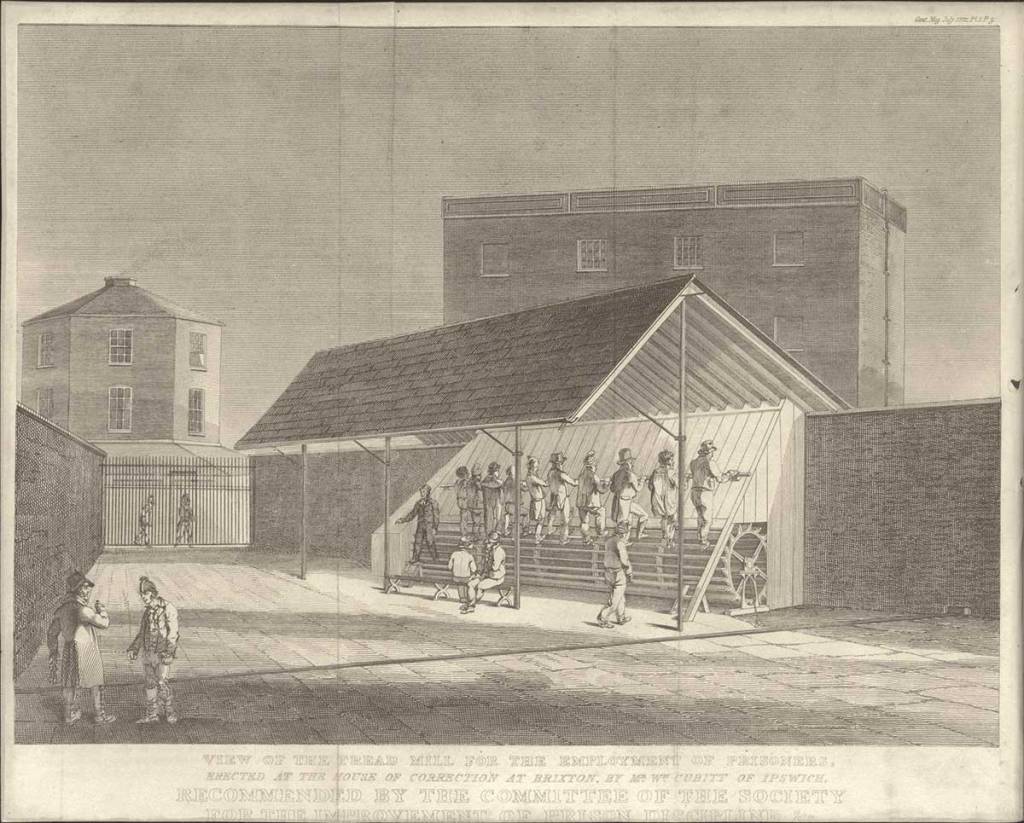
The Moreton Bay penal settlement was a brutal place, by all accounts. In 1836, two Quakers from London, George Walker and James Backhouse, visited on their six year-long fact finding mission to the Australian Colonies. They observed the appalling treatment and behaviour of the convicts, and sometimes their guards, and reported back to the British Government in London in 1838. It proved to be epochal testimony, because from that date onwards the authorities began to wind down the system of punitive correction. But this was not before there had been a great deal of torment and suffering.
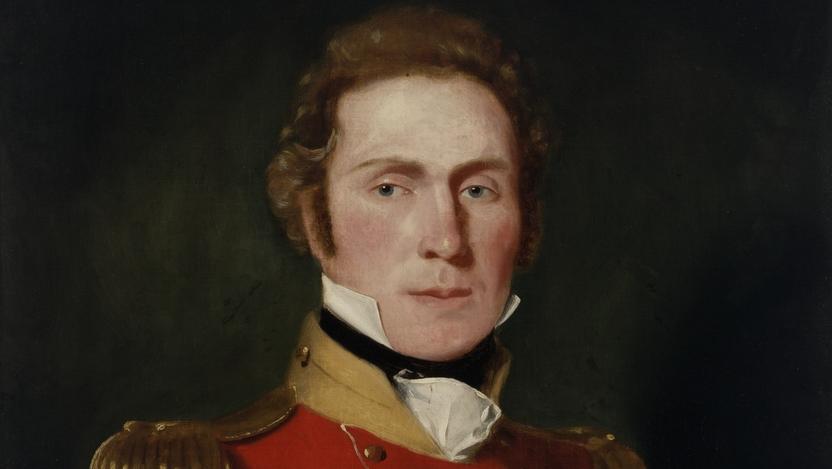
Twenty nine convicts – all in leg irons and chains – were sent in the first batch to Moreton Bay, along with fourteen soldiers under the command of 38 year old Lieutenant Henry Miller. Like most of the commanders who succeeded him, Miller was a decorated veteran of some of the bloodiest battles in Britain’s war against Napoleon, particularly the seven year long Peninsula War in Spain, and had fought in the decisive Battle of Waterloo. This of course did not equip him for starting a new settlement in a hostile environment, especially one staffed by hardened, disgruntled and devious convicts.
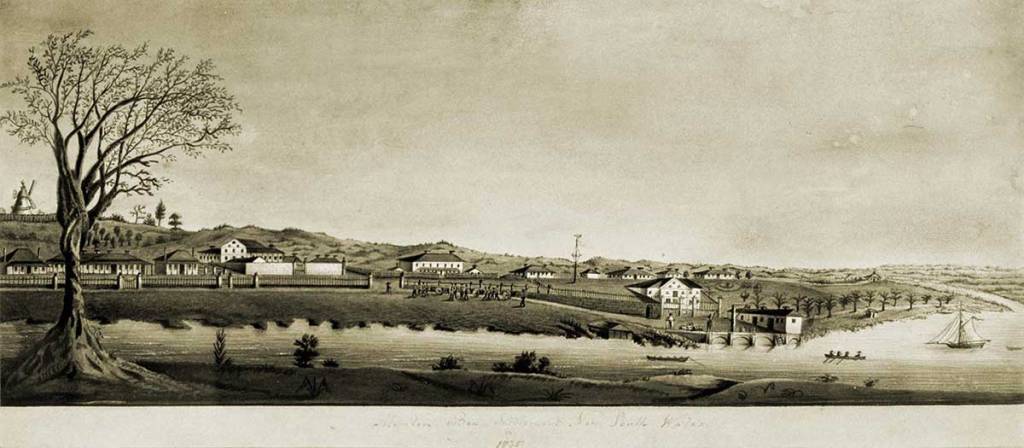
The original site was at Redcliffe on Moreton Bay, as recommended by Oxley, but a combination of poor soil, little fresh water, conflict with Aborigines and camp-wide illness forced relocation just eight months later in May 1825 to what is now central Brisbane. Precise dates and details of the move were not recorded. There is dispute about precisely where they first landed, but they trudged up to where the heart of the city is now, around Queen Street. It was an area known to the Aborigines as Meanjin. The British first called it Edenglassie (perhaps after a small village in Scotland), at the apparently off-the-cuff suggestion of the Chief Justice, but this was soon changed to the name of the river on which it was located. Despite this confusion, or perhaps because of it, the name Moreton Bay stuck as a designation for the whole region and was used most of the time until Queensland separated from New South Wales in 1859.
It was a daunting task to establish a settlement from the thick sub-tropical jungle with so few resources and Lieutenant Miller did not last long. He was dismissed by Governor Brisbane for having done too little to establish the penal settlement, amid some criticism, apparently without any irony given the new compound’s raison d’etre, that he had failed to get the best out of the convicts by being too harsh on them. He left Moreton Bay to return to his regiment based in Tasmania, and was replaced by Captain Peter Bishop, also a veteran of Waterloo.
He adopted a different approach, as he realised that the convicts would never function well under severe discipline, not a view shared in far off Sydney. By this time there were 200 convicts at Moreton Bay. But Bishop in turn failed to make adequate progress, and his regime had seen the first escape of convicts. He was replaced as Commandant in March 1826 by Captain Patrick Logan of the 57th Regiment, whose ‘regime would reflect the iron clad severity that [new] Governor Darling was determined to impose on the convicts of the colony’.
Logan did much to extend the geographical and botanical knowledge of the region during the four years he was in command at Moreton Bay. He carried out a large programme of public works. He was responsible for building the Convict Hospital, the Prisoners’ Barracks and the Military Barracks in 1828, and the Superintendent’s House, later the Railway Engineer’s Office, and the Windmill, now the Observatory in Spring Hill, in 1829.
But he was a cruel man who readily ordered harsh treatment and punishments of prisoners – and perhaps that came back to haunt him.
In an article in The Queenslander magazine in 1891, irreverent journalist J.J. Knight described Logan as: ‘overbearing in his manner towards the prisoners, and always willing to meet the exigencies of a small offence by ordering punishment at the triangles, it is not a matter of wonder that his reign was spoken of as one of terror. It is said that several designs on his life were only averted by some lucky or miraculous circumstance.
‘It was not necessary to commit a heinous offence to merit the displeasure and prescribed punishment of the Commandant; the faintest murmur against a task allotted or inability to perform the work was sufficient to secure for the unfortunate delinquent from 50 to 100 lashes, and these were not laid on with a light hand’.
Moreton Bay at this time was in a state of barely suppressed revolt because of the extreme severity of Logan’s rule.
In October 1830, he took a party of five convicts, his batman and Lieutenant Collison to explore up river, as part of his efforts to chart completely the whole region. The small party eventually got to Esk, about 80 kilometres away. Late one afternoon, Logan decided to follow the trail of a horse he had lost on a previous trip, or at least that is what he told the others. He was never seen alive again. Ten days later a search party discovered his badly battered body, naked and lying face down in a creek. Around the desolate scene there were found the remains of his notes, torn into pieces, a portion of his bloodstained waistcoat and his boots. The ill-fated disciplinarian had been savagely beaten about the head and face and ‘he was much disfigured’. It was said at the time that he had been killed by Aborigines, but there was no evidence to support this allegation. It is also possible that escaped convicts killed him. So deeply unpopular was he that there was ‘insane joy’ in the convict barracks when they heard the news. One soldier’s wife wrote in a letter home that ‘the convicts sang and hoorayed all night, in defiance of the wardens’.
An extract from the diary of a Stuart Russell who visited the Moreton Bay district in 1841 may be an apt memorial of Logan with an intriguing conclusion about his murder.
‘This place remembers the name of Logan with terror. There were many instances, I am told, of men driven to desperation by cruelties practised on them, so that they would cast lots for cutting each other’s throat in order to get rid of their own lives by being hung in Sydney. This same Logan, I am assured, was murdered by blacks at the instigation of the whites’.
Logan was replaced by Captain James Clunie. He was ruthlessly strict if the occasion required it, but at other times showed acts of kindness to the convicts which were quite unknown in Logan’s day. On the whole Clunie did much to make life more bearable, and when he returned to Sydney in November 1835, the Sydney Gazette commented: ‘Captain Clunie unites in his own person those two rare qualities to be met with conjointly – namely, that of a rigid disciplinarian and a mild-mannered gentleman. The consequence has been, that since the time he took command at Moreton Bay we have heard of none of those tumultuous uprisings and murderous doings among the prisoners there which distinguished his predecessor’s reign of terror, and which have occasionally marked the character of the sister settlement of Norfolk Island.’
Under his command the Moreton Bay Penal Establishment began to develop as a town, at least in part due to the ‘first class’ of convict being sent there during this time.
It has been estimated that over the 18 years of its existence as a penal settlement there were probably around 3,000 convicts, of which around 200 were women, with a peak of 947 in residence in 1831. Half the men were Irish, while just twelve of the women were.
During its time as a penal settlement free settlers were officially not allowed within 80 kilometres. However, Brisbane Town unofficially functioned as the distribution centre for the squatters on the Darling Downs. The squatters were a handful of mostly well-connected Scottish men running 100,000 sheep and 5,000 cattle on the town’s hinterland. They brought their stores, stock and personnel there, and exported their meat, hides and wool by ship.
Moreton Bay was officially proclaimed a free settlement on the 4th May 1842, when it ceased to operate as a penal settlement, and the last of the Camp Commandants was withdrawn to be replaced by an officer with ‘a more pleasing appellation’ of Police Magistrate – Captain Wickham of the Royal Navy. On the 7th December the first Brisbane land sales were held in Sydney, where several people spent a little too much on speculating about the new Town’s future. The same month saw the inauguration of the first steamship service between Brisbane and Sydney by the Hunter River Steam Navigation Company with the steamer Shamrock.
Being anointed a free settlement opened the way for Brisbane to develop under its own steam, though there was precious little of it in the very early days.
In 1846, four years after free settlement, it was home to about 1,200 men and almost 500 women. For the next six years, a trickle of around 150 new residents arrived each year. The town started to accelerate for a while after that; 10,000 people arrived over the next dozen years as more and more free settlers settled in the city.
In those early days, the frontier town of Brisbane was rough and violent.
Originally it was not so much a town as three villages – swampy South Brisbane, North Brisbane and elevated Kangaroo Point, with no bridges over the river. People rowed across or caught a ferry. There is still a ferry operating from Kangaroo Point to the City Centre, probably on the same route as 150 years ago. Visiting ships moored to an old tree trunk at South Brisbane.
North Brisbane was the more prosperous of the villages, being the centre of the fledgling government and where most of the well-to-do lived. It had the only two substantial buildings in the settlement: the Commissariat Stores and the Court House, left over from the convict years. South Brisbane was a staging post for sheep, cattle and other produce coming in from the Tweed in the south and the Darling Downs.
Kangaroo Point was basically a service centre. There were two slaughterhouses there – one on each side of the point, Mackenzie’s Boiling Down Works near the Ferry Terminal on the town-facing river bank, ‘Tinker’ Campbell’s Boiling Down Works on the eastern side – set amid slab and box-like weatherboard cottages widely separated by rutted, dusty tracks. It was an unsanitary place, with no running water. The two slaughter works created an unsavoury mush of pollution in the river and generated a rotten smell. All the offal dumped in the river enticed marauding sharks upstream, making swimming a risky business.
There were rough and rowdy hotels like Sutton’s Inn and Bush Inn, patronised by slaughtermen and timber getters up from the Tweed River area for some rest and recuperation lubricated by splashing a month’s and more wages in just a few days. There were several sly grog shops that served as gambling dens and brothels, catering for the needs of the lusty young seamen and squatters in town to enjoy the fruits of their hard labour often in tough unrelenting conditions. Wild alcohol-fuelled parties were young men’s compensation for months at sea or the weeks spent out in the bush, and also for slaughtermen working long, bloody, physically demanding hours in the abattoirs.
From those early rough, raw days the town grew as more free settlers and immigrants, primarily from Britain, arrived. Most, of course, arrived by boat back then, others from southern Australia.
The Illustrated London News sent a correspondent on the first British government assisted ship to sail direct to Moreton Bay from the Royal Dockyard at Deptford in London in 1848. The 558 tonne three-masted sailing ship was called Artemisia. It was, the magazine said, ‘spick and span new’. In the early evening of the 29th of July under the vigilant eye of Captain John Prest Ridley with 209 eager and optimistic emigrants on board, it weighed anchor and was towed downstream by a steam-tug to Gravesend, from where it set sail for the great Southern Land.
The government granted free passage, including food, to farm labourers, shepherds, female domestic servants and dairymaids, and also to a few blacksmiths, wheelwrights, carpenters and other country mechanics. Emigrants had to be of good character and recommended for their sobriety and industry.
Four and a half months later, after victualling stops at Hobart and Sydney, the Artemisia arrived off Cape Moreton on the 13th December 1848.
The image of early journeys by boat may have suffered by association with gruesome stories of the First Fleet and convict ships in general. But by many accounts these emigrant ship journeys were not unpleasant. We do not have direct reportage of life on the Artemisia, but we do of later trips. Young William Smith from Manchester sailed on the Young Australia to Moreton Bay 16 years later. He wrote in his diary:
‘Joined the Young Australia at Gravesend during pouring rain dressed in an Oilskin Coat and Sow Wester [hat]. Our ship is a magnificent clipper with very lofty sails; admirably adapted for speed. The captain is agreeable & tries to make all on board comfortable; the crew are picked men; no blubbers among them. With regard to the passengers there is a fine lot of handsome young fellers & a few pretty girls, many of whom are from Ireland. The berth clerk says we are the finest lot as a whole which he has ever seen & I think he is not saying too much. I spent the afternoon in getting the berth into something like ship-shape but in this I & my companions have not succeeded so well as some of the other fellows. There are three in our berth; I occupy the top bunk & there are two underneath …
‘Dinner & tea both good; they were served out to all in the 2nd Cabin passengers at once, a practice which I hope will be continued all the voyage, as it will be much more comfortable than doling out provisions to each man per week. Sou Westers quite the rage all day & Crinolines have disappeared; all seem inclined to be jolly under every circumstance & there’s none of that weeping & moping amongst the females that might have been suspected. We were tugged from Gravesend about 6pm & have just cast anchor (9pm) in the Downs. At the present moment, we have been regaled with pleasing & melodious strains of Concertina, Cornopean, flute and fiddle, all playing different tunes simultaneously & the well-known airs of Rule Britannia, Limerick Races, the Old 100th [psalm] & Dixey’s Land are delightfully blended into one harmonious whole. Add to this, the voices of several young ladies engaged in singing the ensuing hymn & you may faintly imagine the ‘sounds which reach mine ear’. At 9.30 lights are put out in the berths & silence reigns supreme, save for the rattling of the Cordage, the flapping of the sails against masts, or the peculiar cry of the Seamen hauling in a rope.’
Once these ships reached the mouth of the Brisbane River, all goods was off loaded onto smaller vessels so they could get over the sand bar at the river’s mouth. Then they navigated the meandering river and often rode the incoming tide for 24 kms to Brisbane.
Richard Watt, a fellow Mancunian travelling with William Smith wrote in his diary about seeing Brisbane for the first time:
‘The town was in full view by the time we came to our own landing place, and I confess that it exceeded any expectations by far. It is large and straggling, connecting up North and South Brisbane, built for the most part on an undulating land, which stretches apparently for many miles westward. On the summits of the highest rises are built churches, chapels, and the observatory or signal station.
‘Of the young capital itself, my first impressions were by no means favourable. There was but one street really worthy of the name, and the principal thoroughfares are so ingeniously laid out that the majority of them lead to nowhere. The site of the town itself, at least that portion on the north bank of the river, both in a geographical and sanitary sense, an error from the first.’
On setting foot on his new home town Richard Watt said: ‘At the landing stage all was confusion and bustle, excited passengers hauling up their luggage to the wharf, each trying to secure the best places for fixing it. Then the meeting of long parted friends, or the disappointment of others who had come out expectant, and learned for the first time (as in two cases) that their brothers had met a cruel fate. These were touching scenes to the thoughtful and observant.’
Mid-19th Century Brisbane was dominated by its role as a maritime port thanks to the agricultural trade generated by the Darling Downs and timber getting in the Tweed region. This trade fostered rapid growth in port activities supporting imports and exports. There was a hustle and bustle of ships operating from any of three main wharves and boasts plying their trade on the river, including river steamers working the waters between Brisbane and Ipswich, loading wool from the Darling Downs and depositing the bales in Brisbane’s woolsheds. American Artist Frederick Schell said the reaches of the river around Brisbane resembled a ‘miniature Mississippi’.
In those early days of free settlement visitors noted the predominance of inns and hotels, where liquor licensing laws were more often than not honoured in the breech. This did not, as one commentator at the time remarked, tend to raise the moral standard of the place.
The cart haulers, and indeed the more well-to-do squatters themselves, made their visits to the settlement occasions for uproarious conduct. When the pious Reverend Dr. Lang visited Brisbane he was ‘very much shocked’ at what he saw, and declared that ‘the habits of the people were most irregular’ which, one local commentator said was, ‘after all, a mild way of putting it’. The reverend doctor relates one of the incidents, which had helped shape his melancholy conclusion. It was retold by the early newspaperman J.J. Knight writing in The Queenslander magazine in 1895.
‘Several squatters were drinking in an inn in Queen Street when one of the number offered to wager that he would jump his horse over the table at which they sat. This sportsmanlike, though extremely foolish bet, was quickly taken up and without further ceremony the horseman appeared on the scene booted and spurred in the orthodox manner. But in those days when erecting public houses it was not deemed necessary that rooms should be lofty; and the house referred to was not built out of the ordinary style of architecture.
‘This fact does not appear to have even suggested itself until the rider had attempted the feat, and had received such a rebuff from the ceiling as to cause him to quickly reach the floor again and to ruminate over his own foolish action. It need scarcely be said that the attempt was never repeated again.’
A key milestone in Brisbane Town’s development was the startup of its first newspaper, The Moreton Bay Courier, in 1846 – the forerunner after some mergers with other newspapers of today’s The Courier Mail. The original Courier was founded by James Swan, a printer who had been a compositor on the Empire newspaper in Sydney. Its first copy was printed in ‘a garret of a building’ on the corner of Albert and Queen Streets, afterwards known as the North Star Hotel, which burnt down in 1868. Its first edition reminded readers that it had ‘been established in compliance with the almost unanimous wish of every resident of character, property, and intelligence in this extensive district’ and that its presence had long been rendered necessary by reason – and here was a sentiment that was to echo down the years in Queensland – of ‘the unfounded impressions that prevail elsewhere respecting the climate, capabilities, and resources of this colony’.
By the middle of the 19th Century, Brisbane was beginning to take on more of the appearance and substance of a substantial provincial centre. The early months 1850, for example, saw the establishment of a Circuit Court in February; the Custom House was completed in April; in May a tender was accepted for building a bridge over Breakfast Creek at a cost of £180; May also marked the opening of the new Catholic Church in Elizabeth Street; and arrival of Mr. Justice Therry, the first Circuit Judge.
Despite what the genuinely heroic efforts of so many of those early Brisbane and Darling Downs pioneers to carve a living out of a harsh environment, there was a dark shadow over much of the development.
There was a period of warfare between the squatters and Aborigines, which, by 1846, saw over fifty whites killed, about 11% of the population. No one knows how many local natives perished but one estimate is that over 300 died in Moreton Bay.
And it is not a view of history based on 21st Century values that finds this disturbing. Knight, writing in the 1890s, reported that the early colonial period was ‘one of slaughter, scores upon scores of the aborigines falling victim to the white man’s gun. One of them who assisted in putting many of the unfortunate blacks out of existence told [Knight] of several incidents which if repeated here would scarcely be regarded as pleasant reading, not yet redound to the credit of certain persons who shall remain nameless. That the blacks were exasperating at times by reason of their depredations goes without saying, but that the chief and more serious trouble was ofttimes caused by the bad conduct of whites is a statement which more than one old colonist has substantiated. According to the old resident referred to the theft of a few stores of the killing of a few sheep by the blacks was avenged by wholesale shooting down by the whites – in fact, as many blacks as could be found, whether offenders or not, were swept away’.
But with the growing critical mass of new residents, traders and adventurers passing through the town, there emerged a desire among the City’s elite to get more control of their destinies.
As Knight recalled: ‘it will have been observed that Brisbane by this time was slowly but surely progressing. This fact seems to have been recognised in the South; at any rate the people here suddenly found themselves included in a constituency; how or why was not immediately revealed to the residents. Fearing that some readers may consider this “concession” a contradiction of a previous statement that the South seemed determined to stifle all attempts at progress in Moreton Bay let it be stated that the electorate include Port Macquarie and the Upper Hunter with a seaboard of hundreds of miles, and with the head polling place at Raymond Terrace, on the Hunter [River]. It will be seen that the voice of Moreton Bay people had in the councils of the country in reality amounted only to a very inaudible squeak.’
Soon Port Macquarie was obtaining large amounts of funding each year for repairs of roads and bridges, while Moreton Bay was left isolated and in the cold, with all its petitions for redress unheeded.
It was from this rather meagre base and limited prospects that the locals began to agitate to take charge of their own affairs through their own government.


Leave a Reply